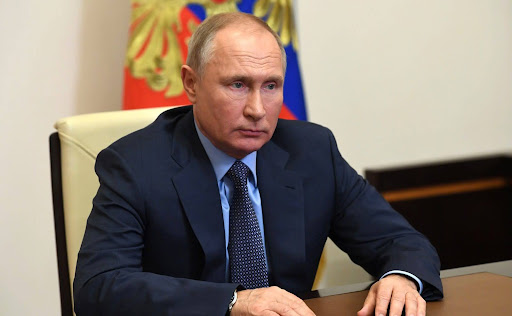
The Beijing summit has become a diplomatic milestone, marking the consolidation of a new global order. Russian President Vladimir Putin and his Chinese counterpart, Xi Jinping, met and declared their relationship to be at an “unprecedentedly high level,” a clear sign of their shared vision for a new, multi-polar world. The two leaders are in Beijing for a massive Victory Day military parade, an event that has attracted dozens of world leaders, signaling a powerful alignment against Western-led institutions.
The parade, which commemorates the 80th anniversary of the defeat of Japan in World War II, is a powerful symbol of this new alliance. It is set to feature a grand display of military might, including marching formations, tanks, and fighter jets. With dozens of world leaders in attendance, the event is seen as a clear signal of a collective desire to build an alternative to the current international system. This show of unity and strength is a direct message to the world about a new geopolitical reality.
Adding another layer of intrigue, North Korean leader Kim Jong-un made a significant arrival by armored train, accompanied by his daughter, Kim Ju-ae, in her first international appearance. Her presence has sparked widespread speculation about her future role and the deepening ties between Pyongyang, Beijing, and Moscow. A Kremlin aide’s suggestion that a meeting between Putin and Kim could be on the horizon only adds to the diplomatic buzz, hinting at a potential trilateral alliance.
The strategic talks have also yielded concrete economic outcomes. A major deal was finalized for the Power of Siberia 2 pipeline, which will provide China with up to 50 billion cubic meters of natural gas annually for three decades. This landmark energy agreement strengthens their economic interdependence and provides long-term stability for both nations. In a reciprocal move, China also granted visa-free travel to Russian citizens, a policy set to begin on September 15.
As the parade preparations continue, a broader regional strategy is also taking shape. Chinese President Xi Jinping underscored the importance of closer cooperation between China, Russia, and Mongolia, signaling a unified vision for regional stability and economic growth. The events unfolding in Beijing are not isolated incidents but rather part of a larger, coordinated effort to re-draw the global map and forge a new geopolitical reality.