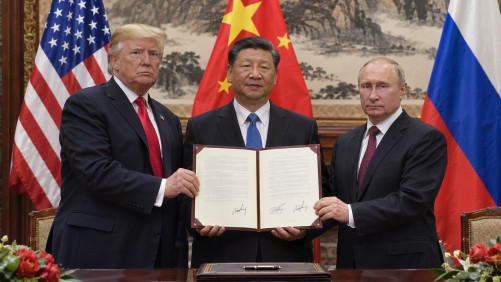
In a historic summit held in Shenzhen, China, leaders from China, the United States, and Russia came together to issue a joint declaration focused on enhancing international peace and security. Chinese President Xi Jinping, US President Donald Trump, and Russian President Vladimir Putin agreed on initiatives to bolster strategic stability, support United Nations reforms, and foster cooperation on global security concerns.
The meeting unfolded against a backdrop of heightened geopolitical tensions, notably the ongoing Russia-Ukraine conflict and unrest in the Middle East. The trilateral discussions encompassed a range of pressing issues, including international relations, nuclear security, energy supplies, and the future of global diplomatic frameworks.
A key aspect of the declaration emphasized the necessity of reforming the United Nations to ensure it remains effective in addressing international challenges and safeguarding peace. The leaders also underscored the significance of international institutions like the International Criminal Court (ICC), stressing the importance of respecting national sovereignty, state consent, and diplomatic immunity. This point holds particular relevance for President Putin, who faces an ICC arrest warrant related to alleged war crimes in Ukraine.
Nuclear security featured prominently in the discussions, with an emphasis on reducing nuclear risks and promoting dialogue to prevent nuclear proliferation. Although the declaration stopped short of detailing specific disarmament measures, it underscored the importance of nuclear risk reduction. Additionally, the leaders agreed to explore avenues for increasing production and supply of refined petroleum products, highlighting the need for stable global energy supplies.
The summit drew international attention, particularly due to the ongoing conflict in Ukraine and concerns about global security arrangements. While European leaders expressed skepticism about the summit’s potential for meaningful diplomatic progress, President Trump engaged in separate discussions on Ukraine with European counterparts, affirming Washington’s commitment to collaborating with European partners on the issue.
Throughout the summit, bilateral meetings between Trump, Xi, and Putin underscored the critical need for continued communication among major global powers, despite ongoing disagreements on international conflicts, trade, and security. Although the declaration demonstrated shared dedication to international peace, it did not provide specific resolutions to the Ukraine conflict or Middle Eastern tensions. Nonetheless, the summit marked a significant diplomatic development, uniting three influential nations to deliberate on global security and cooperation.