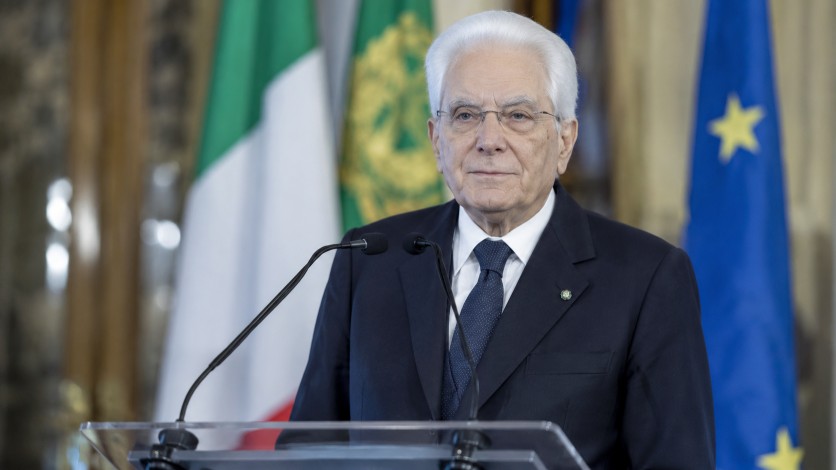
In a recent meeting, Italian President Sergio Mattarella underscored the exclusive constitutional authority of the presidency to grant pardons, addressing the Justice Minister Carlo Nordio. This clarification came in light of the justice ministry’s initiation of pardon proceedings for Mario Roggero, a jeweler aged 72, who is serving a sentence of 14 years and nine months. Roggero was convicted for shooting two robbers fatally and injuring another as they fled his shop after a robbery in 2021. The Italian Supreme Court has upheld this sentence, rendering it final.
The president’s intervention highlights a significant constitutional matter regarding the separation of powers within the Italian government. Mattarella pointed out that a 2006 ruling by the Constitutional Court had already established that the power to grant pardons lies solely with the presidency. This emphasizes the president’s role in ensuring that constitutional provisions are adhered to, especially when there is a potential overlap with ministerial functions.
The Roggero case has stirred considerable debate among the public and within political circles. The circumstances surrounding the jeweler’s actions and subsequent legal repercussions have prompted discussions on the appropriateness of his sentence and the legal avenues available for his potential release. As the debate unfolds, several lawmakers and senior officials from the ruling coalition have voiced their support for exploring all possible legal measures to address the situation.
Amidst this controversy, the president’s assertion serves to reinforce the established legal framework and the importance of adhering to constitutional norms. It also reflects ongoing tensions between different branches of government over legal and judicial processes. The outcome of this case and the broader implications for the justice system continue to be closely monitored both within Italy and internationally.
As the dialogue continues, the focus remains on balancing justice and legal protocol, while also considering the public sentiment and political pressures surrounding high-profile cases like that of Mario Roggero. The president’s role in such matters underscores the delicate balance of power and the critical importance of constitutional adherence in the governance of Italy.