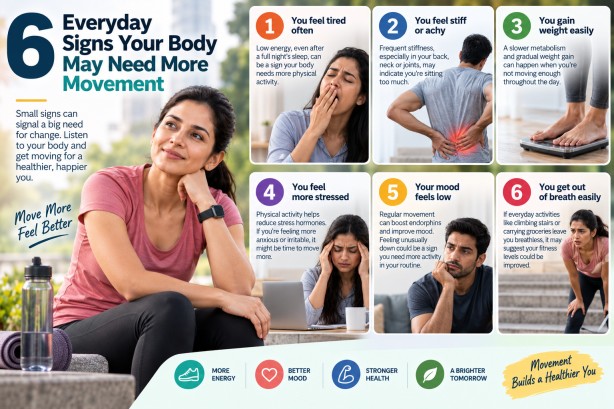
Often, your body doesn’t need to scream with pain to indicate that it craves more activity. Spending hours seated at a desk, behind the wheel, or being inactive can subtly diminish your flexibility, strength, balance, and energy over time. These changes might not be immediately noticeable, but if you pay attention to your body’s signals during everyday routines, you might find encouragement to increase your activity levels before a sedentary lifestyle starts impacting your daily life.
One such signal is feeling stiff after sitting for extended periods. If standing up from your chair leaves your back, hips, shoulders, or legs feeling tight, it may be your body’s way of requesting more frequent movement. Incorporating short breaks for movement throughout your day can help keep your joints from becoming too stiff.
Experiencing fatigue after activities that should be simple, like climbing a few stairs or walking short distances, might suggest a need for improved fitness. Engaging in regular physical activity can gradually enhance your endurance, making daily tasks feel less exhausting. Additionally, if you find yourself feeling sluggish mentally or physically after long periods of inactivity, incorporating quick movement breaks or short walks can help break the monotony and boost your energy levels.
Furthermore, noticing a decline in your balance, such as struggling to stand on one leg or navigate stairs, could be a sign that your stability and coordination require some attention. Activities like walking, strength training, and balance exercises can support and improve your stability. Similarly, if maintaining good posture seems challenging, with frequent slumping at your desk, it might indicate that prolonged sitting and weak muscles are taking a toll. Strengthening your core, back, and legs can promote better posture, especially when combined with regular breaks from sitting.
As you age, it might be easy to attribute difficulty in everyday movements—like bending, squatting, or standing up from a chair—to getting older. However, these challenges could stem from a lack of regular movement. Gradually introducing more activity into your daily routine can help preserve your mobility and independence. It doesn’t require lengthy gym sessions; short walks, stretches, using stairs when possible, and basic strength exercises can be effective. Consistency is key, with regular small movements being more sustainable than sporadic intense workouts. If you notice persistent stiffness, significant weakness, or other concerning symptoms, consulting a healthcare professional is advisable. Paying attention to your body’s subtle cues for more movement can lead to improved strength, mobility, and overall wellbeing, regardless of your age.